
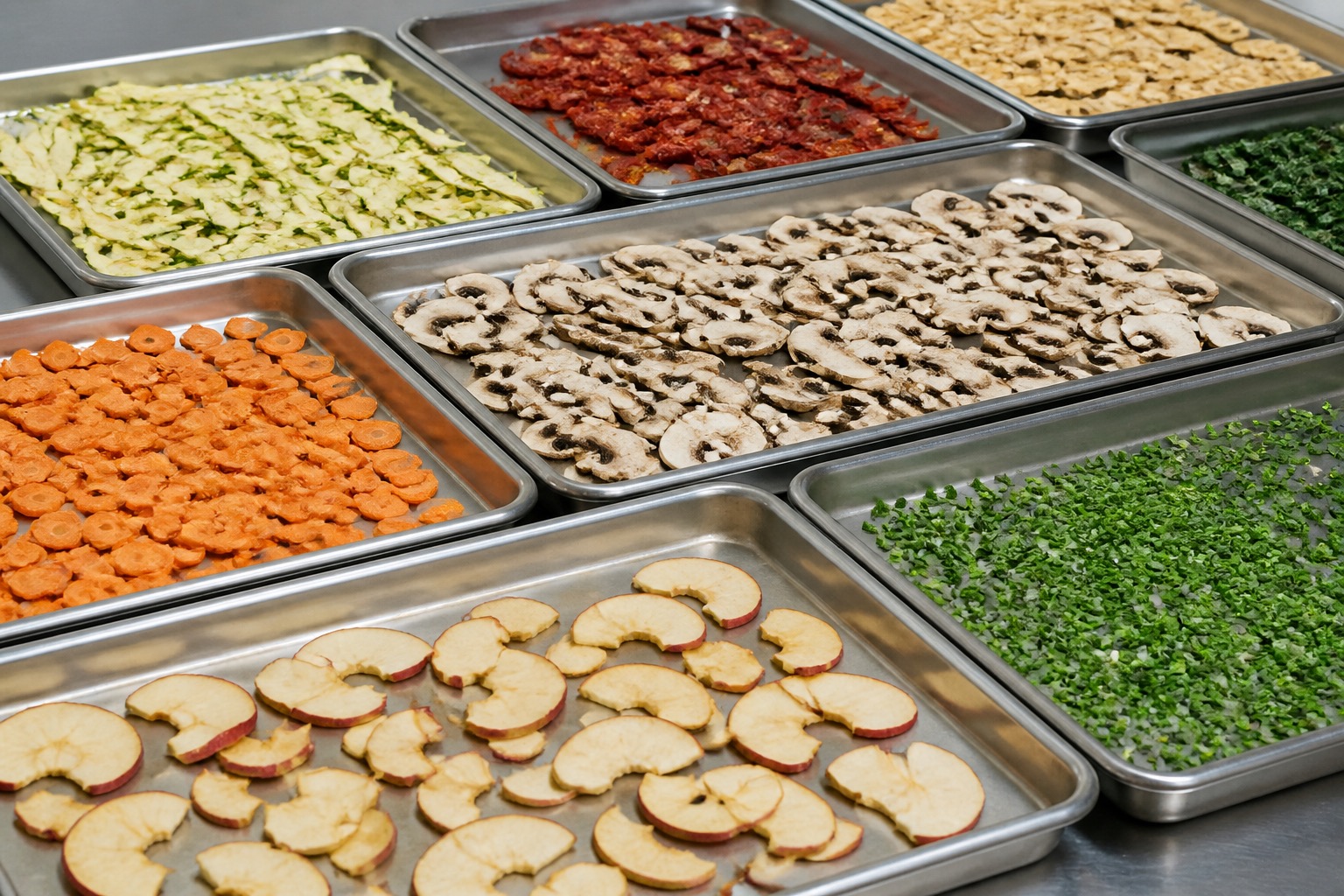
Food drying applications are assessed by material form, moisture behaviour, temperature sensitivity, loading method and the quality expected after drying. The categories below provide a starting point for an industrial project discussion.
Fruits
Fruit slices, pieces and whole products can differ in size, surface area, natural sugar and starting moisture. Describe the cut form, fresh quantity and desired texture.
Vegetables
Vegetables and roots are reviewed around preparation, thickness, loading density, airflow and target moisture. Consistent preparation helps make a practical comparison.
Herbs and spices
Leafy herbs, aromatic materials and spices have different shapes and quality priorities. Colour, aroma, particle size and gentle handling should be included in the brief.
Tea and medicinal plants
Tea and botanical materials are considered around product form, temperature sensitivity, moisture targets and the way the dried material will be handled afterward.
Coffee, cocoa, nuts and seeds
Coffee, cocoa, nuts and seeds vary in density, size, surface condition and moisture movement. A sample description and loading method help define the evaluation.
Seafood and meat
Seafood and meat projects need a clear preparation method, loading plan, finished-product target and operating context before equipment scope can be discussed.
Start with the material brief
No application page can replace project-specific material information. Review machine directions or Discuss Your Food Application.